|
|

   
|
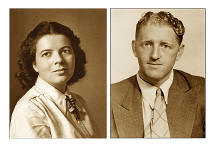
The Sunday Independent (South Africa)MEMORY AGAINST FORGETTING: MEMOIRS FROM A LIFE IN SOUTH AFRICAN POLITICS, 1938-1964Review: Alan LipmanThis is a finely crafted volume: the lucid, analytic record of someone who was engaged, who was embedded in the politics of South African resistance from the late-1930s to the 1960s. If on entering a new century, you wish to touch the core of those momentous decades, get this book, devour it. Be prepared, though, to be devoured by your growing insight into spirited mass opposition to the dying years of Smutsian post-colonialism as well as the initial forays of National Party bigotry, corruption and brutality. Whether or not you lived through that agitated period, whether you share Bernstein's resolutely left-wing perspective or not, you will find his recollections as gripping as they are historically informative, as forthright as they are revealing, as scholarly as they are readily accessible. You will be introduced to the troubled times of a remarkable couple, comrades Rusty and Hilda Bernstein; the latter, a woman whose analogous dedication and achievements also warrant full attention. For me the term "comrade" has long had, still has, revolutionary connotations. To address another or be greeted in this manner is to express individual and social solidarity in a potentially worldwide, historically rooted striving to shift humankind from exploitative injustice and cruelty to cooperative fellowship, to humane social relationships. Though I later wandered down more libertarian ways than he, in my mind's eye Comrade Rusty has, over some 50 years, been a frequent exemplar: since we met as ex-servicemen after the second world war, since I worked in his drawing office as a student architect, since we were briefly together in an underground Communist Party group, during our years of mutual exile abroad. Now he re-visits us, ever the analyst, theoretician, activist, the stimulating and helpful companion. Again he fires my insurrectionary imagination, as, surely, he will ignite those who treat themselves to this quietly didactic book. Among the facets of a sustained political life which Bernstein illuminates, the most constant is his propensity for incisive analysis, for epitomising E M Forster's memorable invitation, "only connect". This is a pervasive thread, through events leading to and surrounding the post-1948 Votes for All assembly and the Suppression of Communism Act of 1950, the Congress of the People and proclamation of the Freedom Charter in June 1955, the Sharpeville massacre of March 21 1960 and the subsequent state of emergency. Throughout these and the many similarly significant episodes in which he participated, often centrally, Bernstein searches unceasingly for connections, for broad explanatory contexts. Perhaps the most impressive of these is the complex of interrelated events assembled in his chapter To Put Up or Shut Up, in his depiction of how, in 1960-61, the ANC and other organisations came to abandon their long-standing principle of non-violent opposition. Here he juxtaposes such seemingly disparate issues as the then astonishing rift in Russo-Chinese relations, Chief Albert Luthuli's Nobel Peace Prize, the government's referendum for withdrawal from the Commonwealth and the abortive strike called in protest by the disenfranchised black resistance movement. Taken together, the ramifications of these are teased out to disclose subtle interdependencies, to highlight changes in political, social and economic contexts that call for major shifts of policy. In this instance, those shifts focus on the pressing necessity for meeting brutal force with force. Initially that was 'interpreted to mean widespread sabotage: acts that do not imperil human life. Umkhonto weSizwe was born. Increasing state repression led to less and less fastidious action. Shortly afterwards, the author, with Nelson Mandela, Walter Sisulu, Govan Mbeki and others, stood accused at the Rivonia Trial. Following the petty-minded and vindictive fictions presented by the prosecution, he alone among his comrades was acquitted. Isolated and depressed he bowed to the now urgent need for escape into exile with his family. If there is a need for the feminist contention that "the personal is political" to be affirmed, this book does so. Despite the author's reticence about such matters, one is reminded repeatedly, and always poignantly, of the effects of his wife's and his en-forced separations from their four children, from each other. There are constant calls on neighbours to care for the children after late-night arrests, there is the bewilderment of little ones witnessing the forcible removal of parents from home, there are necessary secrets between spouses. There are the constant disjunctions imposed on daily life by a viciously vengeful police state, not least of which was the de-moralising difficulties of earning money during wilfully prolonged trials, spells in prison and 90 punishing days of solitary confinement. Intentionally or otherwise, Bernstein provides a template against which to gauge many taken-for-granted truths. Were, for instance, trade unionists in the hands of bloody-minded agitators intent primarily on despoiling the country's economy? Was the ANC led by a cabal seeking principally to sup-plant its fellow white citizens; worse, to banish or murder them? Did the Communist Party advocate gory revolution, a national bloodbath? Were members of these and cognate organisations naive dupes, ignorant natives all too ready to be manipulated by demagogic ogres? The testimony of this book gives no credence to these raw caricatures, nor to the marginally less crass beliefs often associated with them. Quite the contrary. Bern-stein's pages are peopled with dedicated democrats; activists with informed social visions that they tested and re-assessed in what he terms their "tradition of consultation and majority consent". That, then, is what Comrade Rusty has been up to of late - shoring up memory against casual records as well as consciously suppressed forgetfulness. For this, much thanks. Reprinted courtesy of the Sunday Independent, South Africa |